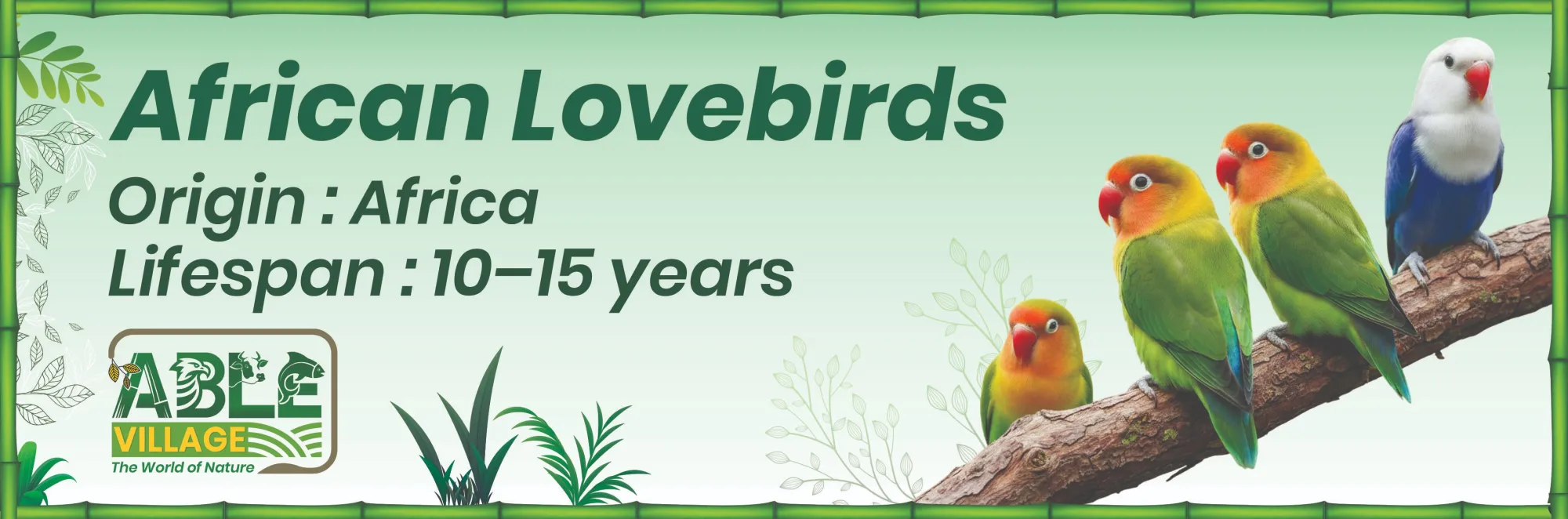
African Lovebirds
African Lovebirds are small, colourful, and affectionate parrots best known for their strong pair bonding and playful nature. Always active and social, these birds are a joy to watch as they interact closely with each other. At Able Village Kannur, African Lovebirds attract visitors with their bright colours, cute size, and lively behaviour.
Appearance & Size
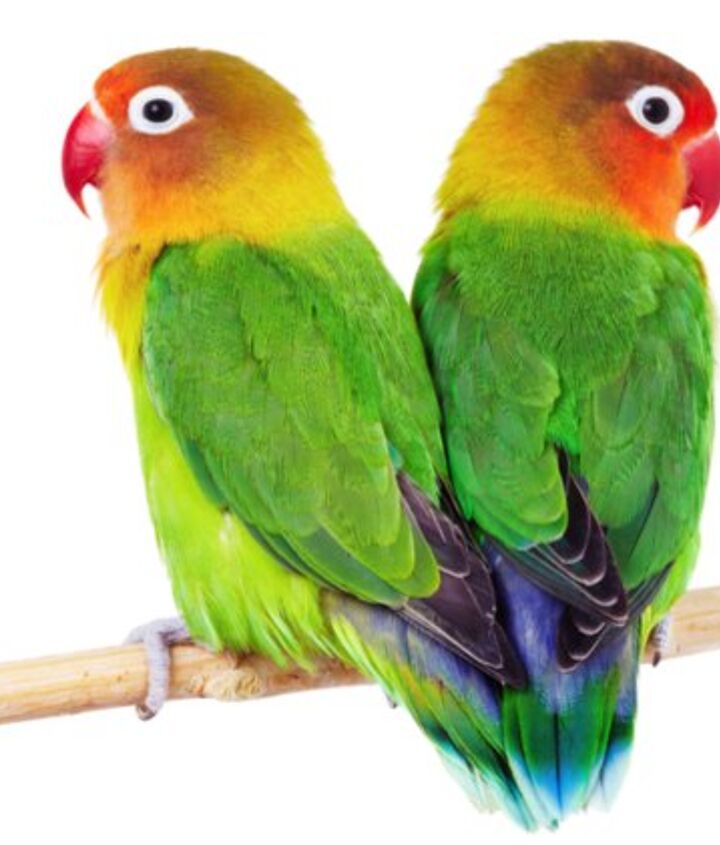
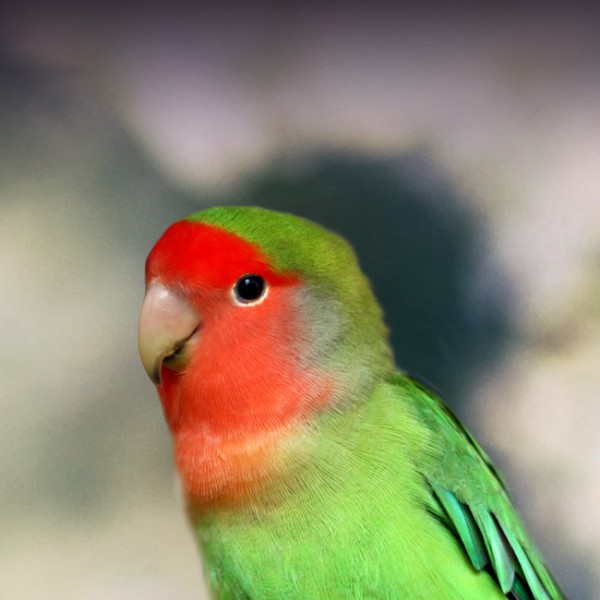
African Lovebirds are small parrots with compact bodies and vibrant colours.
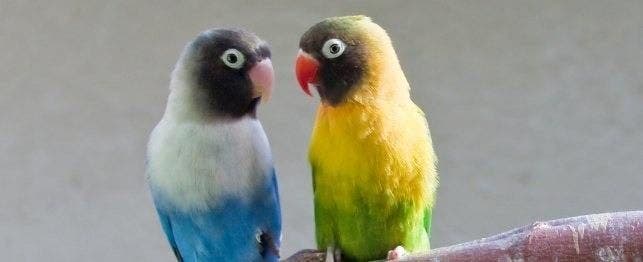
- Body Colour: Green, yellow, blue, peach, white (varies by type)
- Face: Peach, white, or dark mask depending on species
- Beak: Short, curved, red or horn-coloured beak
- Eyes: Dark, expressive eyes
- Tail: Short and rounded
- Length: Around 13–17 cm from head to tail
- Weight: Approximately 40–60 grams
Their small size and bright colours make them very attractive and easy to spot.

Nature & Behaviour
Lovebirds are energetic, social, and highly affectionate birds.
- Very playful and active
- Strongly bonded pairs (often seen sitting close together)
- Enjoy climbing and hopping
- Curious and alert
- Can be vocal with soft chirps and calls
They are happiest when kept in pairs or small groups.
Intelligence & Learning Ability
African Lovebirds are smart and quick learners.
- Learns routines easily
- Recognizes familiar surroundings
- Enjoys toys and interactive play
- Communicates through sounds and body language
- Shows strong emotional bonding
They may not talk much, but they express emotions clearly.
Natural Habitat
In the wild, African Lovebirds are found in:
- Woodlands
- Savannas
- Grasslands
- Forest edges
They are native to different parts of Africa.
Food & Diet
A balanced diet keeps lovebirds healthy and active.
Typical diet includes:
- Fruits (apple, banana, papaya, berries)
- Vegetables (carrot, leafy greens, corn)
- Seeds and grains
- Sprouts
- Special small parrot feed
They enjoy fresh food and constant activity.
Lifespan
With proper care, African Lovebirds live a good long life.
- Average lifespan: 10–15 years
- Some can live longer in well-maintained environments
Interaction at Our Park
At Able Village Kannur, visitors can:
- Watch lovebirds interacting closely
- Enjoy their playful movements
- Learn about pair bonding in birds
- Take photos under caretaker supervision
Caretakers ensure the birds remain comfortable and stress-free.
Why African Lovebirds are Special
- Strong pair bonding behaviour
- Small, cute, and colourful
- Very active and playful
- Social and expressive
- Loved by kids and families
These birds truly show the meaning behind the name “lovebirds”.
Fun Facts
- Lovebirds often sit very close to their partners
- They are named for their strong pair bonds
- Very active despite their small size
- Communicate constantly with soft sounds
Bird Info
-
Scientific Name
Agapornis (genus)
-
Common Name
African Lovebirds
-
Origin
Africa
-
Average Lifespan
10–15 years
-
Adult Size
13–17 cm
-
Weight
40–60 grams
-
Diet
Fruits, vegetables, seeds, grains, small parrot feed
-
Temperament
Affectionate, social, playful, energetic, curious