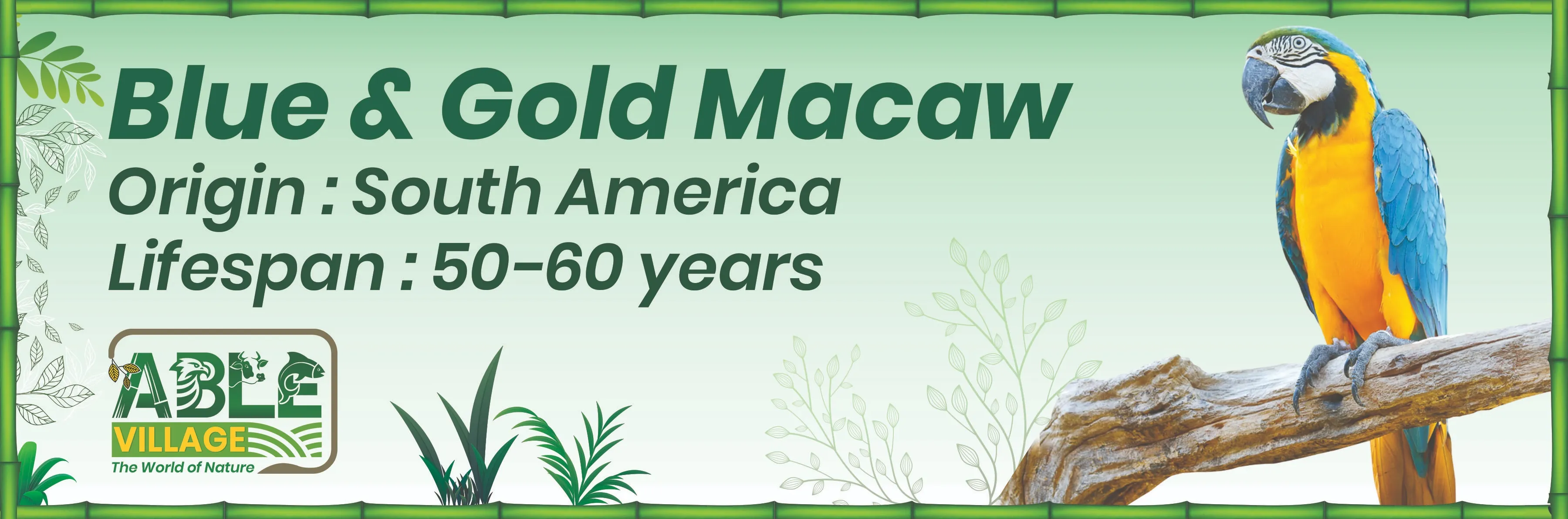
Blue and Gold Macaw

The Blue and Gold Macaw is one of the most beautiful and intelligent parrots in the world. With its bright blue wings, golden yellow chest, and expressive face, this bird easily becomes a favorite among visitors of all ages. Known for its playful nature and strong bond with humans, the Blue and Gold Macaw is a true attraction in any animal park or nature village.
Appearance & Size
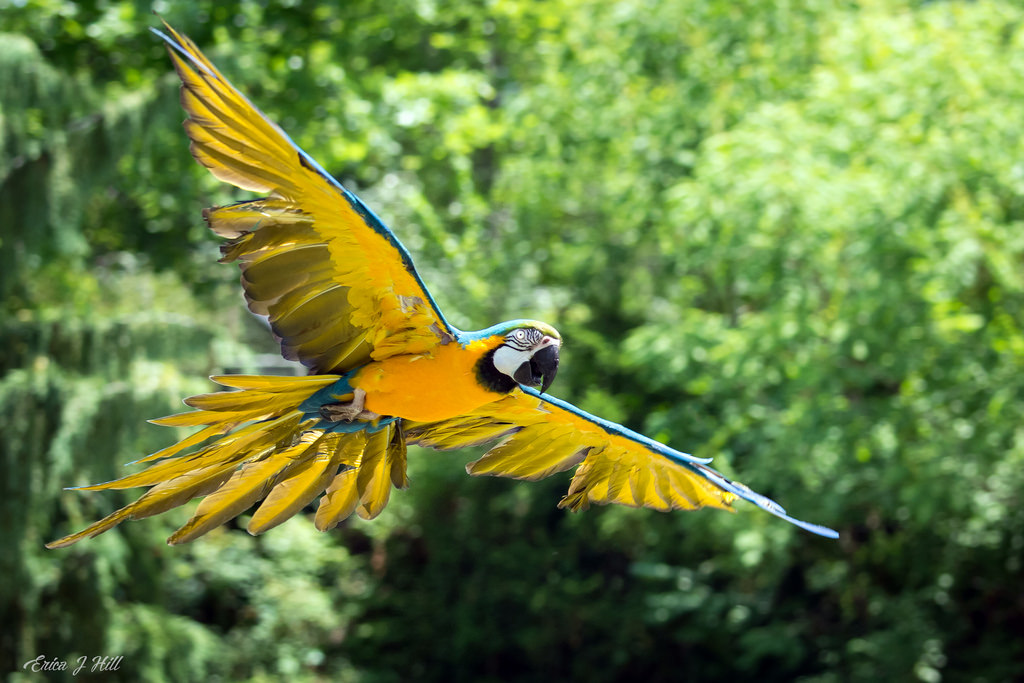
Blue and Gold Macaws are large parrots with a striking colour combination.
- Body Colour: Bright blue wings and back, golden yellow chest and belly
- Face: White skin with thin black feather lines near the eyes
- Beak: Large, curved, and very strong (used for cracking nuts)
- Length: Around 80–90 cm from head to tail
- Wingspan: Can reach up to 1 meter
Their long tail feathers and bold colours make them easy to spot even from a distance.
Nature & Behaviour
This macaw is famous for being smart, social, and expressive.
- Very friendly and curious
- Loves attention and interaction
- Can recognize people and voices
- Enjoys playing, climbing, and exploring
- Communicates using loud calls and body language
They are not silent birds, but their sounds are part of their natural behaviour and charm.
Intelligence & Learning Ability
Blue and Gold Macaws are among the most intelligent parrots.
- Can learn words and simple phrases
- Understand routines and signals
- Quickly bond with caretakers
- Enjoy puzzle toys and challenges
Because of their intelligence, they need mental stimulation and regular interaction.
Natural Habitat
In the wild, these macaws are found in:
- Tropical rainforests
- Riverbanks and wetlands
- Palm forests
They naturally live in pairs or small groups and prefer open spaces where they can fly freely.
Food & Diet
A healthy diet is very important for macaws.
Typical diet includes:
- Fruits (banana, papaya, apple, mango)
- Nuts and seeds
- Grains
- Vegetables
- Special parrot feed
They especially enjoy cracking nuts using their powerful beak.
Lifespan
With proper care, Blue and Gold Macaws can live a very long life.
- Average lifespan: 40–60 years
- Some can live even longer in well-maintained environments
This makes them one of the longest-living bird species.
Interaction at Our Park
Visitors can:
- Observe the macaw up close
- Learn about its habits and intelligence
- Watch its playful behaviour
- Take photos under supervision
Our caretakers ensure the bird is comfortable and stress-free at all times.
Why Blue and Gold Macaw is Special
- Extremely colourful and eye-catching
- Highly intelligent and emotional
- Forms strong bonds with humans
- A perfect example of exotic bird beauty
This bird is not just something to see, but something to experience.
Fun Facts
- Macaws use one foot like a hand to hold food
- They can recognize familiar people
- Their beak is strong enough to crack hard nuts and shells
- They can show emotions through feather movement
Bird Info
-
Scientific Name
Ara ararauna
-
Common Name
Blue and Gold Macaw
-
Origin
South America (Brazil, Venezuela, Peru)
-
Average Lifespan
40 – 50 years (can exceed 70 in captivity)
-
Adult Size
76 – 86 cm (30 – 34 inches)
-
Weight
900 – 1200 grams
-
Diet
Fruits, nuts, berries, seeds
-
Temperament
Intelligent, social, vocal, affectionate